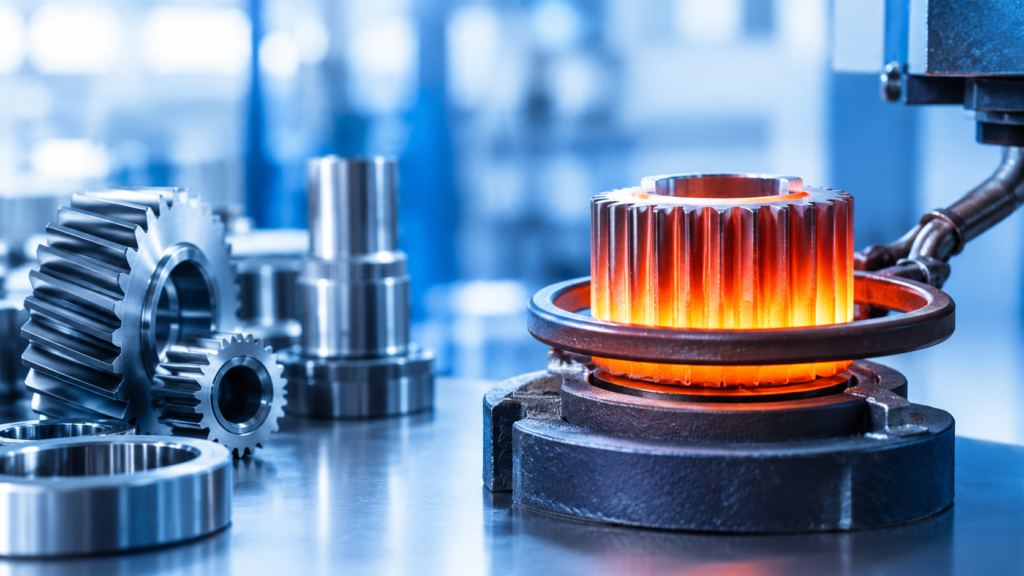
Quick Answer: Heat treatment is a controlled process of heating and cooling metal to change its physical properties, such as hardness, strength, or flexibility, without altering its shape. Common methods include annealing, quenching, tempering, normalizing, and case hardening, each suited to different strength, durability, or machinability needs.
Metal in its raw form rarely has the exact properties needed for a finished product — it may be too brittle, too soft, or inconsistent in structure. Heat treatment solves this by carefully controlling temperature and cooling to reshape the metal’s internal structure, without changing its physical form. This guide explains what heat treatment actually involves, the main processes used across industries in India, and how to know which one fits a given application.
What Exactly Is Heat Treatment?
Heat treatment is a controlled process of heating metal to a specific temperature, holding it there for a set time, and then cooling it in a particular way. This changes the metal’s internal grain structure, which in turn affects properties like hardness, strength, ductility, and resistance to wear, all without changing the metal’s overall shape.
Why Does Heat Treatment Matter for Metal Components?
Without heat treatment, many metal parts would either be too soft to withstand stress or too brittle to handle impact. Treating metal correctly allows manufacturers to tailor its properties to the exact demands of a part, whether that’s a cutting tool that needs extreme hardness or a structural component that needs flexibility under load.
What Are the Main Types of Heat Treatment Processes?
| Process | What It Does | Typical Use |
| Annealing | Softens metal and relieves internal stress | Preparing metal for machining or forming |
| Quenching | Rapidly cools metal to increase hardness | Tools and components needing high hardness |
| Tempering | Reduces brittleness after hardening | Balancing strength and toughness |
| Normalizing | Refines grain structure for uniformity | Improving consistency before further processing |
| Case Hardening | Hardens only the outer surface | Parts needing a tough core and hard exterior |
How Does the Heat Treatment Process Generally Work?
- The metal is heated gradually to a specific target temperature, depending on the material and process.
- It’s held at that temperature long enough for the internal structure to transform evenly.
- The metal is then cooled using a specific method — slowly, in air, or rapidly in oil or water.
- The cooling method and speed largely determine the final hardness and strength achieved.
- Some processes, like tempering, involve a second heating stage to fine-tune the final properties.
Benefits of Proper Heat Treatment
- Improved strength and durability for demanding applications
- Better wear resistance, extending the life of tools and components
- Reduced brittleness, lowering the risk of sudden failure
- More consistent performance across a batch of manufactured parts
- Ability to tailor the same base metal for very different end uses
Where Is Heat Treatment Commonly Used?
Heat treatment plays a role across industries in India, from automotive components and industrial tools to construction hardware and machinery parts. Any application where a metal part needs a specific balance of hardness, strength, or flexibility typically relies on some form of heat treatment during manufacturing.
Conclusion
Heat treatment plays a quiet but essential role in making metal components strong, durable, and fit for purpose. Understanding the different processes, from annealing to case hardening, helps explain why the same base metal can end up with very different properties depending on how it’s treated. For industries across India relying on consistent, high-quality metal parts, getting this process right makes a measurable difference in performance and lifespan.
Frequently Asked Questions
- Does heat treatment change the shape of the metal?
No. Heat treatment changes internal properties like hardness and strength, but it doesn’t alter the overall shape or dimensions of the part when done correctly.
- What’s the difference between annealing and tempering?
Annealing softens metal and relieves stress, usually before further processing, while tempering is used after hardening to reduce brittleness while retaining strength.
- Why do some metal parts need case hardening instead of full hardening?
Case hardening creates a hard outer surface while keeping the core tougher and more flexible, which suits parts that need to resist wear without becoming fully brittle.
- Can heat treatment be applied to any type of metal?
Most heat treatment processes are primarily used on steel and certain alloys, since their response to heating and cooling is well understood and controllable.
- How is the right heat treatment process chosen for a part?
It depends on the metal type and the part’s intended use — factors like required hardness, flexibility, and wear resistance all influence which process fits best.
- Is heat treatment a one-time process, or can it be repeated?
Some processes, like tempering, are deliberately done in stages, while others are typically performed once during manufacturing, depending on the desired final properties.